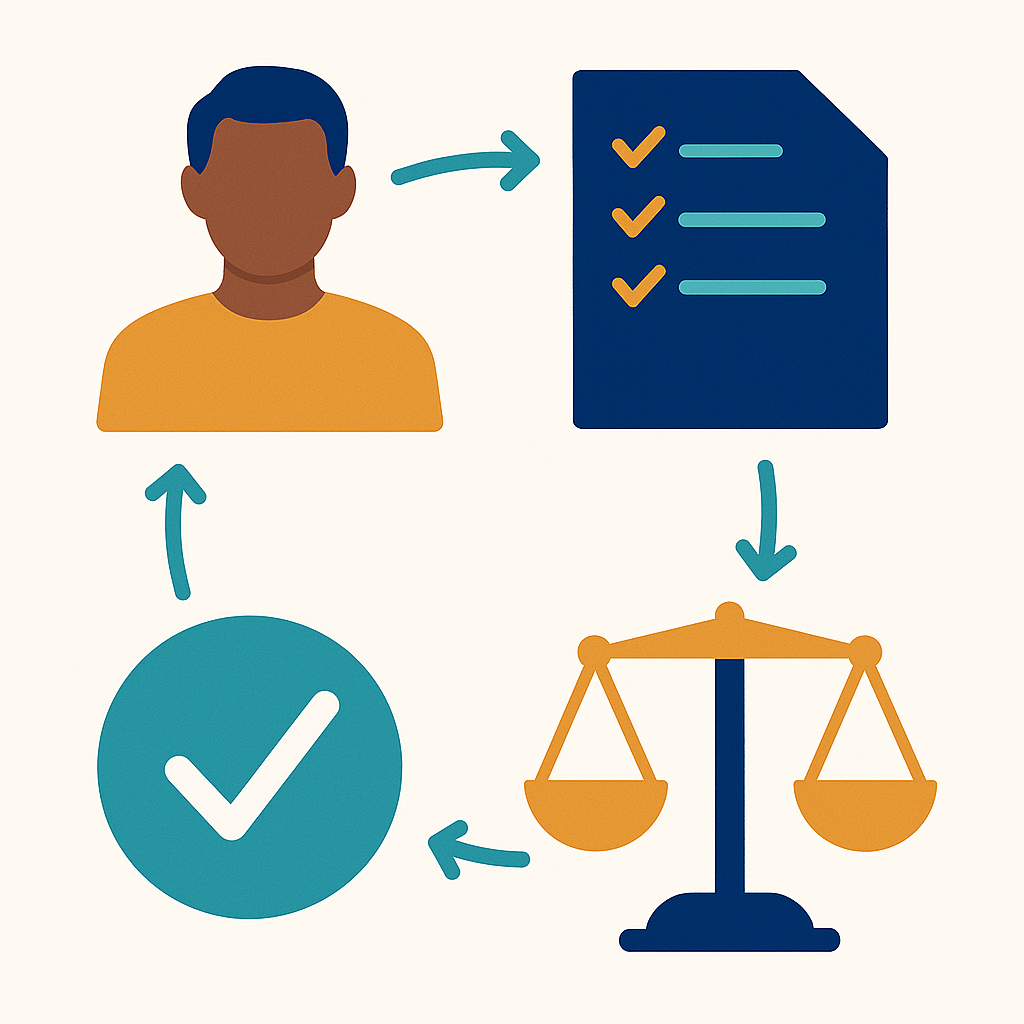
Hiring your first few engineers is one thing. Scaling to dozens across teams and time zones? That’s a different challenge entirely.
Without the right structure, tech hiring at scale becomes a chaotic mix of slow decisions, inconsistent assessments, and frustrated candidates. But with the right framework, recruiters can run a fast, high-quality process that keeps up with company growth.
Here’s a 5-step process to help you scale efficiently—without lowering the bar.
Before you can scale your hiring, you need internal clarity and alignment. Start by meeting with engineering leads and hiring managers to identify the non-negotiables for success in each role.
Work collaboratively to define 4–5 core competencies per role. These should reflect both technical and behavioral attributes, such as:
Next, build a role-specific scorecard that describes what "excellent," "good," and "needs improvement" look like for each competency. Use real-world examples to make the rubric concrete—what does a strong communicator sound like in a system design interview? What does "initiative" look like on a small team?
Make this rubric visible across your hiring team. Review it before every hiring kickoff, and train interviewers to anchor their evaluations to it. This creates consistency, reduces bias, and helps your team make faster, more confident decisions as volume increases.
Before you can scale your hiring, you need alignment. Meet with engineering leads to identify what makes a successful hire across each role.
Document these in a shared hiring scorecard with clear definitions of what "excellent," "good," and "poor" look like. This becomes your single source of truth for interviewers, recruiters, and hiring managers alike.
A well-defined rubric reduces bias, enables better calibration, and helps you scale hiring decisions beyond the founder or original team.
If every role has a different take-home test or evaluation format, hiring gets messy fast. Candidates get confused, interviewers apply inconsistent standards, and quality starts to slip as volume increases.
The solution? Define a core assessment strategy per role type (e.g., frontend, backend, DevOps, data engineering) and apply it consistently. Start by creating a library of reusable, role-specific challenges. These should focus on real-world tasks the candidate would actually encounter in the job—not esoteric algorithm questions.
Leverage AI-powered assessment tools to:
Pair every assessment with a clear grading rubric so that engineers, recruiters, or hiring managers can all evaluate submissions objectively. When possible, automate scoring and reporting to reduce reliance on engineering resources.
Standardized assessments ensure fairness, reduce time-to-decision, and improve candidate experience—all critical ingredients when you're hiring at scale.
If every role has a different take-home test or evaluation format, hiring gets messy fast.
Instead, standardize assessments for each role type (e.g., frontend, backend, full stack, DevOps). Use AI-powered platforms to generate relevant, stack-specific coding challenges directly from job descriptions. These tests should be short, focused, and role-relevant—not algorithm brainteasers.
Create rubrics for grading each test to ensure consistency. Where possible, make tests auto-scored to reduce engineering overhead.
Bonus: Candidates appreciate structured, thoughtful tests that reflect the job they’re applying for.
Manual resume review doesn’t scale. It drains recruiter time, introduces unconscious bias, and delays your response to high-potential candidates. At scale, every minute saved in the early funnel has a compounding effect downstream.
Start by integrating automation tools that:
These tools help surface strong candidates faster while filtering out unqualified ones, freeing your team to spend time on the conversations that matter. When paired with structured outreach and clear qualification rubrics, automated screening ensures speed without compromising quality.
Bonus: Candidates appreciate fast responses. Automating early steps improves candidate experience, especially in competitive markets.
Manual resume review doesn’t scale. Worse, it introduces unconscious bias and slows down your funnel.
Use automation tools to:
Automating early-stage screening frees up your team to focus on high-signal conversations and keeps top talent moving quickly through your process.
Scaling hiring isn’t just about reacting to open roles—it’s about anticipating future needs and having a bench of qualified candidates ready. This requires a shift from reactive hiring to proactive recruiting.
Start by building and maintaining a talent CRM (candidate relationship management system) to track and engage high-potential candidates over time. These might include:
Nurture these relationships by:
In parallel, monitor top-of-funnel metrics to ensure sourcing volume and diversity stay strong. Look at where your best candidates come from, where drop-off happens, and where additional outreach is needed.
With a strong pipeline in place, you reduce time-to-fill, avoid last-minute scrambles, and maintain quality even as hiring needs grow or shift rapidly.
Scaling hiring isn’t just about filling open roles—it’s about building a repeatable, proactive system for identifying future hires.
Keep a bench of qualified candidates warm by:
A strong pipeline reduces time-to-fill and gives you flexibility when priorities shift or hiring ramps up unexpectedly.
Once your process is live, treat it like a product that evolves with feedback and usage. Create a regular cadence to evaluate the health and performance of your hiring funnel—weekly, monthly, or after each hiring sprint.
Track and analyze metrics like:
Hold retrospectives with your hiring team to review what worked and what didn't. Were candidates confused about expectations? Did interviewers align on final decisions? Was the process too slow for competitive candidates?
Use these insights to iterate. Update rubrics, tweak assessments, remove redundant interview steps, or automate slow handoffs. Small changes compound over time, especially when you're hiring at volume.
The best hiring orgs don’t just scale—they scale intelligently by continuously improving how they evaluate, engage, and close talent.
Once your process is live, treat it like a product.
Run retros after each hiring cycle. What worked? What slowed things down? Where did quality dip?
Use this data to improve. Tighten your rubrics, shorten your loops, refine your outreach. Hiring should evolve as the company grows.
Stop relying on engineers to write take-homes. Stop wasting time with generic coding tests. If you're an in-house recruiter looking to move fast and screen smarter, this is for you.
Grab the free AI-Powered Assessment Template and learn how to:
✅ Auto-generate assessments directly from your job description
✅ Customize difficulty and subject areas with one click
✅ Eliminate the engineering bottleneck in your screening process
This quick-start template gives you a plug-and-play framework you can use today. Perfect for hiring devs, engineers, and technical specialists—even if you're not technical yourself.
📩 Drop your email and we’ll send it straight to your inbox.
👉 Ready to create job-specific assessments in under 5 minutes? Get the template