Why Small & Mid-Sized Companies Struggle With Hiring Consistency
At big companies, entire departments manage recruiting. At smaller ones, that job often falls to busy engineering managers or team leads who already have full plates. The result? Hiring becomes reactive and inconsistent.
One candidate gets a code test. Another gets a conversation. Sometimes the team debriefs. Sometimes they don’t. Over time, these inconsistencies create slow decisions, unclear expectations, candidate drop-off, and — worst of all — bad hires.
Inconsistent hiring isn’t just inefficient. It’s expensive. Every mis-hire costs months in rework and team morale. If you want to build a high-performing team without burning time, you need a simple, structured process that scales.
3 Key Elements of an Effective Hiring Process
A good hiring process is like a well-designed system: efficient, repeatable, and outcomes-driven. Here are the three foundational components every hiring manager should build:
1. A Clear Hiring Plan
- Start with alignment: Define the role, required skills, and success metrics before launching the hiring process. Think beyond just the title — what are the day-to-day responsibilities? What specific technologies, tools, or domains should they be proficient in? What are the must-have technical and soft skills that will enable them to contribute quickly? Clarify what a successful first 30, 60, and 90 days look like. Are they expected to ship a feature, stabilize a system, or lead a cross-functional initiative? Setting these expectations early ensures you attract candidates who match your real-world needs — and helps your team align on what “good” looks like.
- Get input early: Collaborate with stakeholders (like team leads, product managers, and HR) before launching the search to avoid misalignment later. Bring them into a short kickoff meeting where you define the role’s responsibilities, clarify what success looks like, and confirm interview participation. This early alignment prevents confusion about priorities, ensures buy-in from those who will work closely with the new hire, and sets the stage for a smoother, more unified hiring experience.
- Define must-haves vs. nice-to-haves: Don’t overload the job spec. Clarity attracts stronger candidates. Be disciplined about what’s essential versus what’s simply a bonus. Must-haves are the non-negotiable technical or interpersonal skills required to succeed in the role. Nice-to-haves are skills that would be beneficial but are not critical to performance. Distinguishing between the two helps avoid filtering out promising candidates who could grow into the role. It also keeps your internal team aligned and focused during screening and interviews.
2. A Structured Interview Flow
- Standardize the stages: Create a consistent interview flow that every candidate follows. This not only helps you collect better data but also ensures fairness and reduces decision fatigue. A simple structure might look like: screening call → technical assessment → team interview → final decision. Define what happens at each stage, what you're evaluating, and what tools or formats you’ll use. For example, the screening call might focus on motivation and communication, while the technical assessment covers role-relevant coding or systems thinking. Consistency here builds confidence — both for your team and your candidates.
- Assign interview roles: Clarify who is responsible for evaluating each skill area in advance. For example, designate one team member to focus on architecture and system design questions, while another might explore collaboration, communication, or problem-solving. This not only ensures better coverage but helps each interviewer go deeper in their focus area. Share the plan with the interview panel beforehand so everyone knows their role — and you avoid redundancy or missed signals during the loop.
- Use a rubric: Score candidates on the same criteria — so you compare signal, not style. A rubric helps you define what excellence looks like across categories like problem-solving, communication, technical depth, and collaboration. Each interviewer should use the same scale (e.g., 1–5 or 1–3) and write brief justifications for their ratings. This turns vague impressions into measurable data, highlights standout candidates, and creates a transparent record that supports decision-making. The more structured your evaluations, the easier it becomes to reach consensus and avoid bias.
3. A Fast Feedback & Decision Loop
- Sync right after interviews: Don’t wait days to debrief. Schedule a 15–20 minute debrief session immediately after the final interview of the day or within 24 hours. This ensures feedback is fresh and allows your team to make faster decisions while details are still top of mind. Delayed debriefs lead to fuzzy memories, less accurate feedback, and slower momentum. Fast, structured post-interview syncs help you avoid losing top candidates to faster-moving competitors.
- Use scorecards: Quantify input before the discussion. Provide each interviewer with a standardized scorecard that aligns with your rubric. Include clear criteria like problem-solving, technical accuracy, and communication, and ask interviewers to rate each one using a shared scale. Require brief written comments to explain scores — this creates transparency and strengthens the quality of feedback. Having completed scorecards before discussion ensures you’re working from structured data, not vague impressions.
- Commit to a timeline: Make the decision in days, not weeks. Establish a clear decision-making window upfront — for example, “We’ll aim to make a final call within 48 hours of the last interview.” Communicate this to your hiring team and hold each other accountable. Delayed decisions not only risk losing top candidates, but they also drain team momentum. A fast, firm timeline builds trust with candidates and reinforces that your company values efficiency and follow-through.
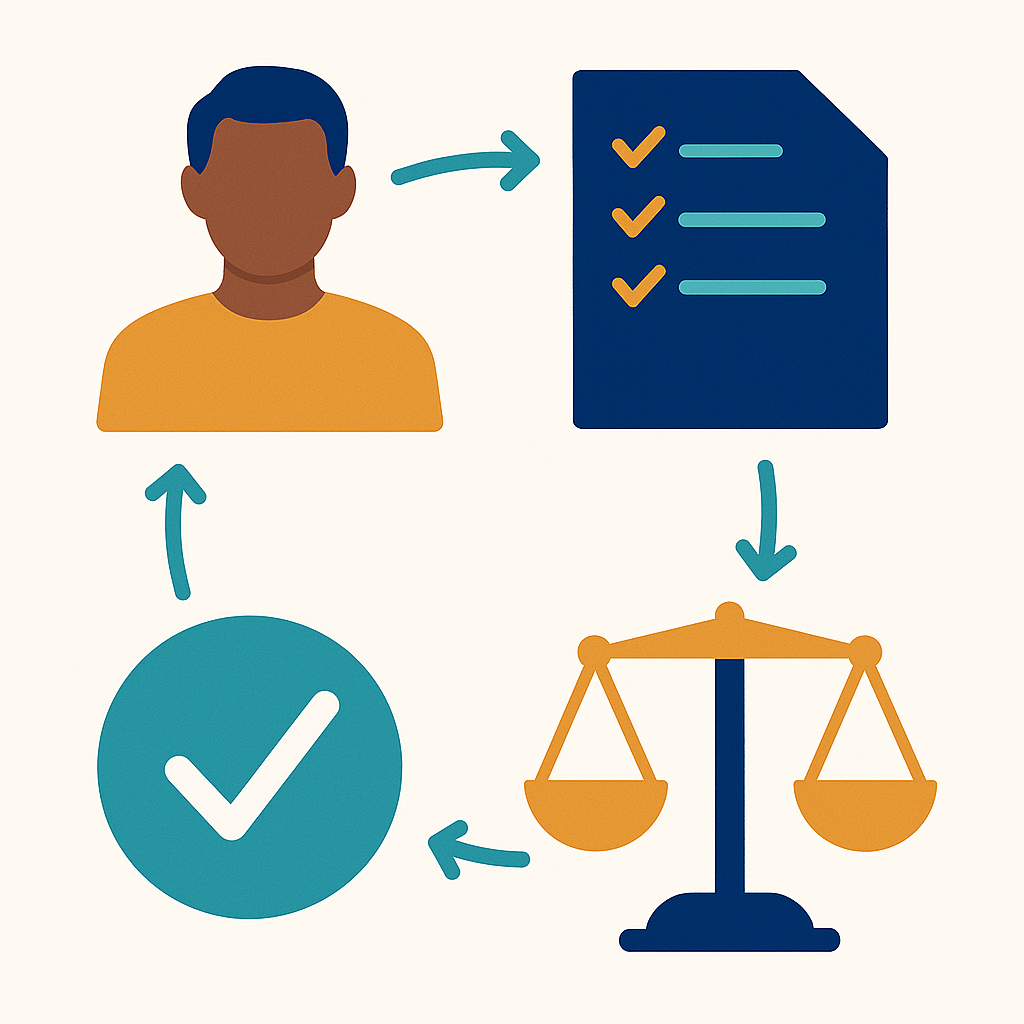
Structure isn’t bureaucracy — it’s a blueprint for fairness, speed, and clarity. Without structure, teams rely on memory, assumptions, and guesswork. With it, everyone knows what to do, when to do it, and how to evaluate success. A well-structured process minimizes delays, reduces bias, and increases candidate confidence — all while saving your team from decision fatigue.
How to Streamline Interviews, Assessments & Candidate Evaluations
The goal of any hiring process is simple: identify top performers efficiently and consistently. Here’s how to get there:
Make Assessments Role-Specific (and Short)
Instead of generic algorithm puzzles, test what the role actually requires. A backend role? API debugging. A frontend role? UI implementation. Limit tests to 30–45 minutes — you’ll improve completion rates and get more relevant data.
Use a Standard Interview Format
Plan each interview in advance:
- Start with a warm-up or overview of the role.
- Use 3–4 structured prompts that reveal how the candidate thinks.
- Leave time for their questions.
Don’t just talk. Listen for how candidates explain trade-offs, ask clarifying questions, and adapt to constraints.
Score Before You Discuss
Ask each interviewer to submit feedback independently. Use a simple rubric (e.g., 1–5 for communication, problem-solving, code clarity). Then debrief together.
This prevents bias, avoids groupthink, and speeds up decisions.
Using Automation & AI to Save Time
A structured process doesn’t mean more work — especially if you use modern tools. Automation and AI can cut your hiring workload in half.
Auto-Generate Assessments
Tools like Provicio can create a custom technical assessment from your job description in under a minute. You simply define the skill areas, technologies, and difficulty level — and the system automatically generates a role-specific test that reflects your real-world needs. It not only creates the questions, but also auto-scores submissions, benchmarks candidates against relevant standards, and provides an at-a-glance performance breakdown. Best of all, it requires zero involvement from your engineering team, freeing them up to focus on building product instead of building tests.
Automate Scheduling & Follow-Ups
Use tools like Calendly or GoodTime to streamline interview scheduling, reduce no-shows, and eliminate the back-and-forth of coordinating calendars. These tools allow candidates to select from pre-set time slots, auto-adjust for time zones, and send reminders to reduce drop-offs. On top of that, build templated follow-up emails for each stage of the process — from confirmation to thank-you notes — so you can maintain a professional, timely communication flow without writing everything from scratch each time. These small automations add up to major time savings and a better candidate experience.
Get Instant, Role-Based Insights
AI-powered platforms now provide detailed breakdowns of how a candidate performs across multiple skill categories like debugging, logic, system design, and even collaboration or communication in some cases. These insights are drawn from structured assessments and behavior during problem-solving tasks, giving hiring teams real-time visibility into each candidate’s strengths and weaknesses. Rather than relying solely on subjective feedback or gut feel, you get consistent, data-backed evidence to guide hiring decisions — resulting in fewer false positives and a higher quality of hire.
The result? You spend less time doing admin and more time making great decisions.